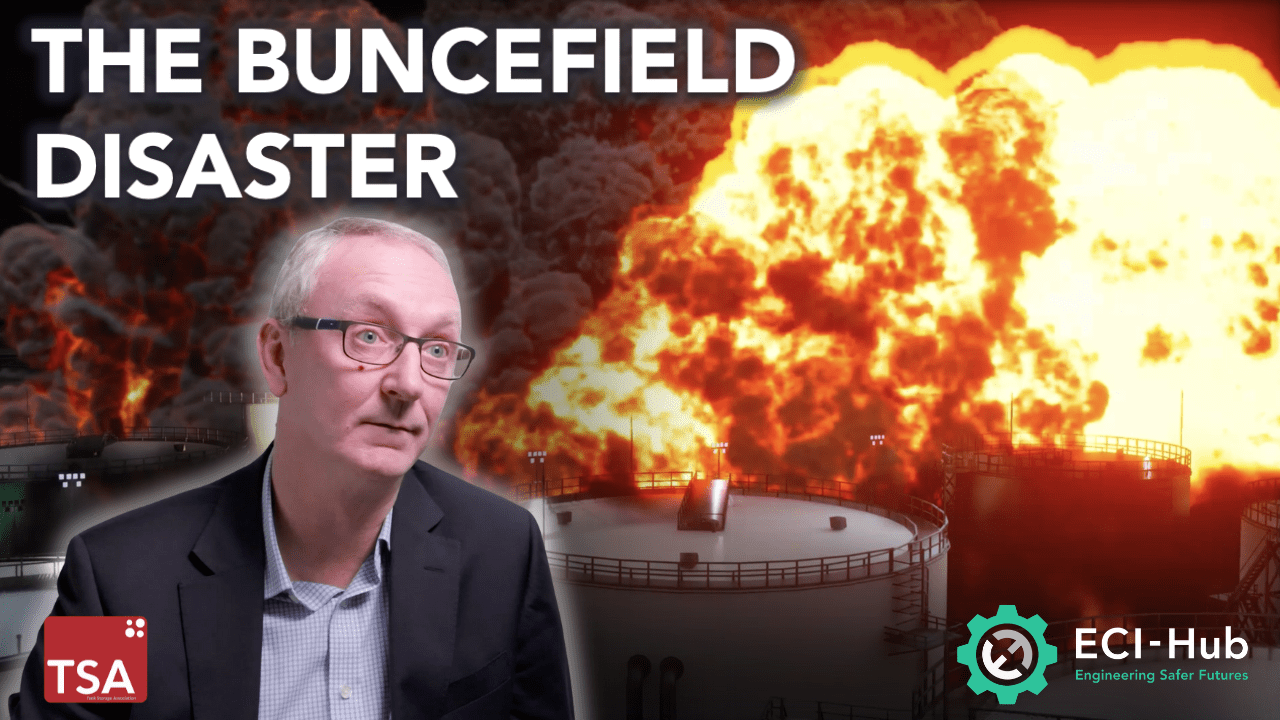
Buncefield: Lessons for Today’s High‑Hazard Industries
INSIGHT
What’s The Most Effective Way To Improve Integrity Across The Board?
The Buncefield explosion remains one of the largest peacetime incidents in Europe. A failure of level control allowed a petrol tank to overfill undetected for several hours, forming a dense vapour cloud that drifted off-site and ignited with devastating force – registering 2.4 on the Richter scale and causing over £1 billion in damage.
Two decades later, Buncefield’s technical and organisational lessons continue to shape UK process safety guidance on overfill protection, secondary containment, vapour cloud explosion hazards and leadership accountability. Yet many new engineers, operators, apprentices and contractors joining the sector today have never heard of the incident.
This free in-depth Hazardex article reflects on the enduring lessons from Buncefield and how organisations can maintain corporate memory to prevent repeat disasters. You’ll learn:
How the Buncefield disaster happened and why its causes still appear in audits today.
Post-incident improvements that reduce risk only if actively maintained.
Emerging threats, from ageing assets to a retiring workforce, that erode safety gains.
Three critical questions every organisation should ask about major-accident hazards.
Five practical actions to preserve safety knowledge and keep your teams aware of why safeguards exist

Author: Jon Wallis
Managing Director of ECFIO Engineering Ltd. / ECI-Hub
Related Resources